


Technology is great, and we all feel that it has changed our lives, making them easier and more productive. For example, when one is shopping at the grocery store, everything is now within reach thanks to barcode technology. Unfortunately, when we use barcode scanners every day, people are not enthusiastic about how it works.
Today's busy marketplace requires an effective system to make or break a business. Obstacles such as human error, time-consuming operations, and complex data entry systems affect the day-to-day operations of a business. Barcodes are a simple and inexpensive way to encode information into a pattern that machines can read. This simple system can quickly solve many business problems and transform data entry systems.

How barcode scanners work to make life easier
How Barcode Scanners Work
Barcode scanners employ a technology that reads black and white zebra crossings on products. Information is entered into a computer or checkout terminal, and the process is completed quickly. It is from this terminal that products are immediately identified from the inventory database.
Barcodes come in two forms; 1D - and the rarer but more general - 2D. one-dimensional barcode;
Commonly used in supermarket products
Organize information horizontally from left to right
Limited to 20-25 characters
They require minimal information to encode
On the other hand, QR codes;
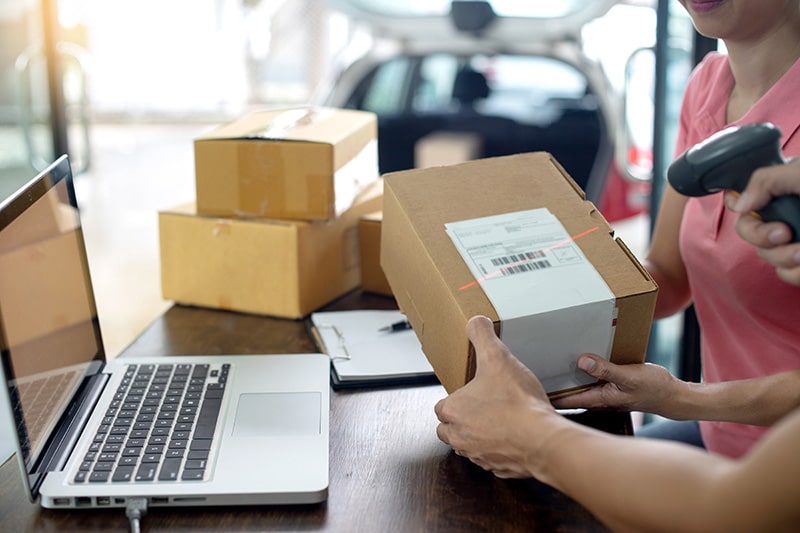
Arranges information horizontally and vertically, allowing more information to be encoded in less space
They can easily store up to 2,000 characters of data
They need an image scanner to read
How barcode scanners work to make life easier
Barcode Scanning Process
First, the scan head shines an LED or laser onto the barcode.
Light is reflected from the barcode into light-detecting electronics called photocells. The white areas on the barcode reflect more light, while the black areas reflect the least.
The unit is configured with an alternating pattern of switches, parallel to the black and white stripes.
The scanner converts switching patterns from connected electronic circuits to binary digits (zeros and ones).
The computer connected to the scanner sends the binary number that does reflect the code.
When it comes to scanners, the first thing that comes to mind is the checkout counter in the supermarket. This is a great example of its use, but barcode scanners have become a staple in people's daily lives.
health care
Few people know how 2D barcode technology can play an important role in the healthcare industry. In fact, the FDA issued a directive requiring machine-readable labels on all drugs.
Hospital deaths from medical malpractice have been reported at 44,000-98,000. In 2013, the National Patient Safety Goal set "correct identification of patients" after 10 years of pushing the initiative. The initiative calls for the use of at least two patient identifiers during blood samples or drug treatment.
2D barcode technology can avoid medication errors such as wrong drug delivery, wrong dose or wrong time. Barcodes are not only used to identify hospitalized patients, but also to manage physical assets. It increases efficiency by allowing nurses to flag unused medications. Nurses can safely relabel and reuse them and save hospitals money and resources.
School
With new innovations emerging, the future of barcode scanners seems bright. What better way to teach young people how to use barcode scanners than to actually use them at school?
Education is more than putting students and educators in one room. Regardless of education level, most institutions rely on the expensive investment of purchasing IT equipment to teach students.
Schools spend millions of taxpayer dollars on technology investments that must be counted. One way is to use a barcode scanner. This has led more schools to turn to automated systems to reduce and eliminate losses from human error.
Using barcode scanners is the most affordable and flexible way for schools to move to a system that provides transparency and accountability. Attaching barcodes to all assets allows teachers and administrators to create a database to track equipment. This makes it easier to avoid manual errors and ensure that every student receives their learning device. The barcode scanner also updates all information by scanning the label and reporting the status back to the cloud.
modern commerce
Barcode scanners have played an important role in the e-commerce revolution. Where would Amazon be without barcode technology? Barcoding significantly increases productivity. Businesses no longer write down UPC codes and manually update inventory every time a customer buys an item. Business owners have the ability to change prices instantly and reduce training time for new employees. When it comes to business, buggy Windows is intolerable. People often make mistakes due to human error. However, scanning items with a barcode scanner is very effective for updating inventory and eliminating errors. After business owners learned how barcode scanners work, it became one of the best inventions they could find. It improves business intelligence by tracking inventory and making logging tools easier to implement on digital platforms.
Reduce inventory management costs
In the case of inventory management, barcode scanners enable businesses to reduce costs. It reduces the time it takes to keep shelves stocked, thereby reducing inventory costs. Asset losses are significantly reduced while maintenance and depreciation become effective standard operations.
Barcode scanning eliminates human error and improves data integrity. Having accurate information in a configuration management database eliminates the error of entering incorrect asset tags or serial numbers.
The versatility of barcode scanning makes it cost-effective for modern businesses to implement in their operations. In the long run, it can improve productivity by reducing the learning curve by reducing employee training time.


