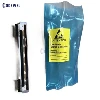
The barcode printer must be frequently cleaned if quality and long-term functioning are to be guaranteed.
Cleaning the print head in step one.
Cotton swabs and alcohol can be used as cleaning agents to frequently clean the print head. Then, turn the print head up, remove the ribbon and label paper, and use a cotton swab (or cotton towel) soaked in print head cleaning solution to gently wipe the print head until it is clean. This will prevent dirt residue from forming when you wipe back and forth. The printhead should then be gently dried with a clean cotton swab.
Platen Roller Maintenance and Cleaning in step two.
The bar code printer glue stick needs to be cleaned frequently. To keep the glue stick clean, the cleaning tool can be used using cotton swabs and alcohol. Additionally, it is to get good printing results and extend print head life. The label paper will hang onto the glue stick throughout printing. If a lot of tiny powder is not removed as soon as possible, it will harm the print head; if a glue stick has been used for a while, any wear or unevenness will interfere with printing and harm the print head.
Clean the rollers in step three.
After cleaning the print head, use a cotton swab (or cotton cloth) soaked in 75% alcohol to clean the rollers. The drum is scrubbed while being manually rotated, then dried after cleaning. The above-mentioned two steps are typically cleaned once every three days. It is preferable to use the barcode printer only once each day if it is regularly utilized.
The drivetrain and enclosure should both be cleaned in step four.
The fact that generic label paper is self-adhesive makes it easier for the adhesive to attach to the shaft and channel of the transmission, and dust will negatively impact the printing outcome. This requires frequent cleaning. The process involves wiping the surfaces of each transmission shaft, the surface of the channel, and the dust in the chassis with an alcohol-soaked cotton swab (or cotton towel), drying it after cleaning.
Cleaning the sensor in step five.
Maintain sensor cleanliness to prevent paper or ribbon mistakes. Both a ribbon sensor and a label sensor are part of the sensor. The instructions outline the sensor's position. It typically needs cleaning once every three to six months. The sensor head is cleaned by wiping it with a cotton swab dipped in alcohol, followed by drying.
Document cleaning in step six.
The guide groove often doesn't have any severe issues, but occasionally it can happen because of human error or poor label quality, in which case it must be cleaned promptly.