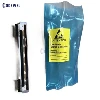
RFID systems usually consist of three components: RFID Labels (or RFID tags), RFID readers, and back-end database systems.

RFID tags: RFID tags are small devices attached to objects that contain a chip and an antenna. The chip stores the object's unique identifier and other relevant data, while the antenna is used to communicate wirelessly with the RFID reader. RFID tags can be divided into active tags (built-in batteries that can actively send signals) and passive tags (powered by signals received from readers).
RFID Reader: An RFID reader is a device used to read and write data stored on RFID tags. It obtains the information on the tag through wireless communication with the tag and transmits it to the back-end system for processing. Readers can be handheld devices, stationary devices, or integrated into other devices.
Back-end database system: RFID systems are usually integrated with back-end database systems to store and manage data related to RFID tags. This data can include the identity, location, status, history, etc. of the object. Back-end systems can perform data analysis, tracking and management as needed.
RFID technology has a wide range of applications in various fields, including logistics and supply chain management, retail, healthcare, smart transportation, asset tracking, etc. It can improve the efficiency of object recognition and tracking, reduce manual operations and errors, and provide real-time data to support business decisions.