Thermal printers are workhorse machines for many organizations, capable of producing high volumes of labels and other media across a wide range of industries. They differ from other types of printers and offer several advantages.
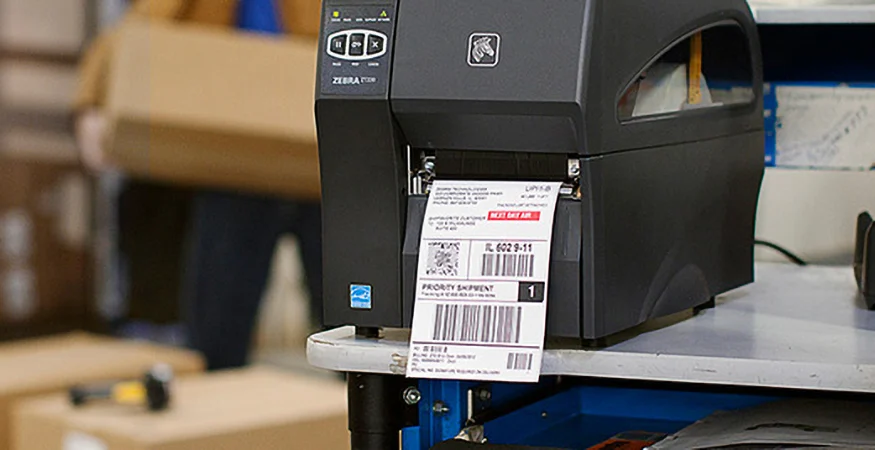
What is a thermal printer?
Unlike inkjet printers, which spray ink onto paper, thermal printers use heated printheads to transfer images to a variety of media. But how do thermal printers work? To understand this, you need to examine two types of thermal printers: direct thermal and thermal transfer.
Thermal Printing Explained
Thermal printers print images directly onto the material without the use of ribbon, toner or ink. The media itself (such as thermal paper, thermal labels, etc.) is thermally and chemically treated so that it turns black as it passes through the thermal print head. However, these types of media are more sensitive to wear, light, and heat, meaning images can fade over time or the media can darken when exposed to heat or light. Cash register receipts or notes are common examples.
Thermal transfer explained
Thermal transfer printers use thermal transfer ribbons with ink. Heat is applied, causing the ink to melt and embed into the media. That's one reason thermal transfer printing offers image quality and durability unmatched by other on-demand printing technologies. Thermal transfer printers do not require chemically treated media and can print on a wider range of label materials, including paper, polyester and plastic.
Thermal printer model options and sizes
There are several options available depending on the application and needs.
mobile thermal printer
Portable thermal printers are designed to fit in the palm of your hand and connect wirelessly for mobile printing needs. They are lightweight, durable, easy to use, and have an easy-to-read display. When choosing a handheld label printer, make sure it's made from durable materials so it can withstand drops and, if necessary, extreme temperatures and harsh weather. Use mobile printers to print receipts, labels and retail labels for hospitality, healthcare, warehouse management and transportation.
desktop thermal printer
Desktop printers are compact and often offer wired and wireless connectivity options. They are generally easy to use and load the media of your choice. While high-quality models are reliable and cost-effective, they may not be able to handle high-volume print jobs. Desktop printers are most commonly used in retail, healthcare, hospitality, and light manufacturing.
Industrial thermal printer
Industrial systems are larger, more rugged and able to withstand 24/7 operations to meet high-volume printing needs. One example is a packaging line where thousands of labels are printed and affixed to products running on a conveyor belt. These systems use print engines and integrate with various supply chain management software and Internet of Things (IoT) technologies to transmit data in real time. Use industrial printers to produce labels and tags for manufacturing, distribution centers, logistics, transportation and retail.
Thermal Printer Advantages and Disadvantages
Convenience, ease of use and speed are the main reasons organizations invest in thermal printing capabilities. Typically, this device is used for specialized purposes such as label printing or patient wristbands, so you don't need to constantly change media. An individual can print a single label at the push of a button, or a unit can be automated to print thousands of labels in a day.
One potential disadvantage of thermal printing includes a limited color palette. Most applications (such as shipping labels or barcodes) only require black printing, so this is usually not an issue. While some units have color options, the selection isn't extensive.
The cost of thermal printers can also vary widely, with some being more expensive. However, because they are so durable, they require less maintenance and last longer than traditional printers. You also don't need to invest in print cartridges or toner, lowering your total cost of ownership over time. With direct thermal technology, you must also purchase special thermal paper.
Industry use cases for thermal printers
Direct thermal printers are often used to print temporary documents such as receipts and tickets. They are also sometimes used in older fax machines.
However, the most versatile option is a heat transfer machine, as they can withstand sunlight, moisture, or harsh conditions. They are ideal for printing barcodes, shipping labels, inventory labels, wristbands and other media for the following industries.
Transportation and Logistics
Pick and pack
shipping and receiving
Inventory management
Proof of delivery or return
Manufacturing and Industry
work in progress
Parts management
device tag
warehousing
quality assurance
Retail and Hospitality
Product Pricing
cycle count
mobile point of sale
Receipt
Gift Cards and Loyalty Cards
Event tickets and wristbands
ID badge
health care
Patient identification wristband
Laboratory/Pharmacy Labels
asset Management
Specimen labeling