PLA 3D Printing Filament: Common Types, Differences, and How to Choose the Right One
Introduction: What Is PLA 3D Printing Filament?
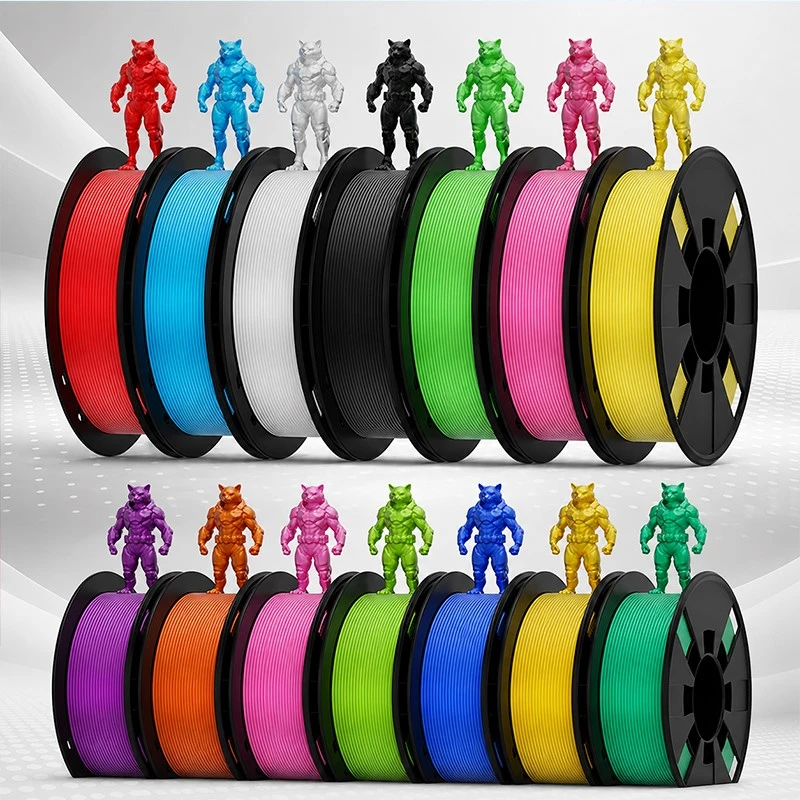
PLA (Polylactic Acid) is one of the most widely used materials in FDM (Fused Deposition Modeling) 3D printing. Derived primarily from renewable resources such as corn starch and sugarcane, PLA is a thermoplastic polymer known for its ease of printing, low warping tendency, and excellent surface quality.
PLA 3D printing filament is commonly used by beginners, hobbyists, designers, educators, and manufacturers to produce prototypes, decorative objects, educational models, and functional components.
As 3D printing technology continues to evolve, manufacturers have developed various types of PLA filament to meet different requirements for strength, appearance, printing speed, and functionality.
Although these filaments share a PLA-based composition, their additives, surface finishes, and mechanical properties can differ significantly.
In this article, we explore the most common types of PLA 3D printing filament, explain their key differences, and help you select the right material for your printing projects.
1. Common Types of PLA 3D Printing Filament
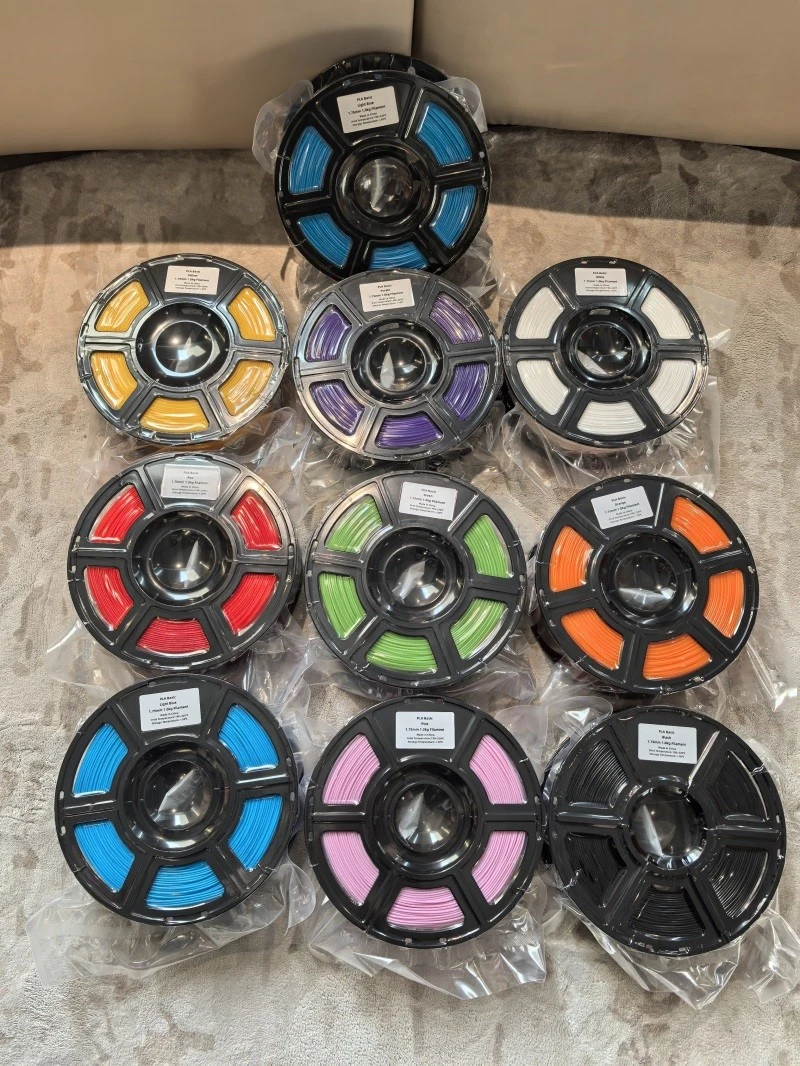
1.1 Standard PLA Filament
Standard PLA is the most basic and widely available type of PLA 3D printing filament.
It offers reliable printing performance, making it an ideal choice for beginners and everyday printing applications.
Key Features:
- Easy to print with minimal warping
- Good dimensional accuracy
- Smooth surface finish
- Low printing temperature compared with many engineering plastics
- Available in a wide range of colors
Typical Applications:
- Educational models
- Decorative objects
- Concept prototypes
- Toys and figurines
- General-purpose 3D printing projects
Standard PLA is best suited for applications where ease of printing and appearance are more important than high mechanical strength or heat resistance.
1.2 PLA+ (PLA Plus) Filament
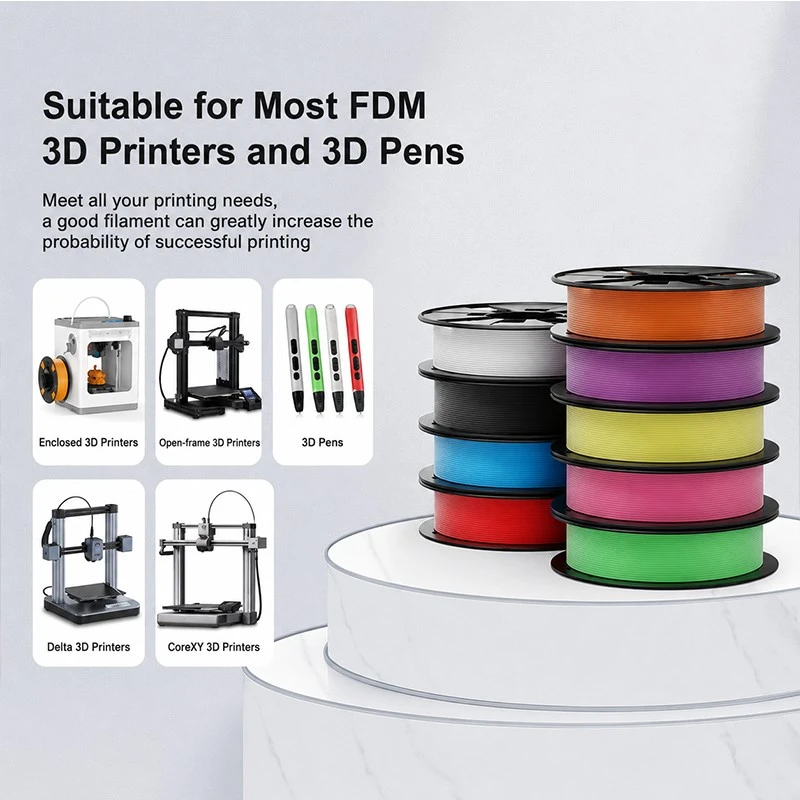
PLA+ is an enhanced version of standard PLA. It typically contains modified formulations or additives designed to improve mechanical performance.
The exact composition of PLA+ varies between manufacturers, as there is no universal formulation standard for this product category.
Compared with standard PLA, PLA+ often provides improved toughness, impact resistance, and layer adhesion.
Key Features:
- Improved toughness and impact resistance
- Better resistance to cracking in many formulations
- Enhanced layer bonding
- More suitable for certain functional parts
- Generally maintains good printability
Typical Applications:
- Functional prototypes
- Mechanical components with moderate loads
- Tool holders and brackets
- Protective cases
- Parts requiring better durability
PLA vs PLA+: What Is the Difference?
| Property | Standard PLA | PLA+ |
| Printing Difficulty | Very Easy | Easy |
| Toughness | Moderate to Low | Generally Improved |
| Impact Resistance | Moderate to Low | Generally Higher |
| Layer Adhesion | Good | Often Improved |
| Surface Finish | Smooth | Smooth |
| Price | Usually Lower | Usually Higher |
| Application | Decorative and general models | Functional and durable parts |
PLA+ is a good option when standard PLA is too brittle for the intended application. However, its actual strength and heat resistance depend on the specific manufacturer's formulation.
1.3 Silk PLA Filament
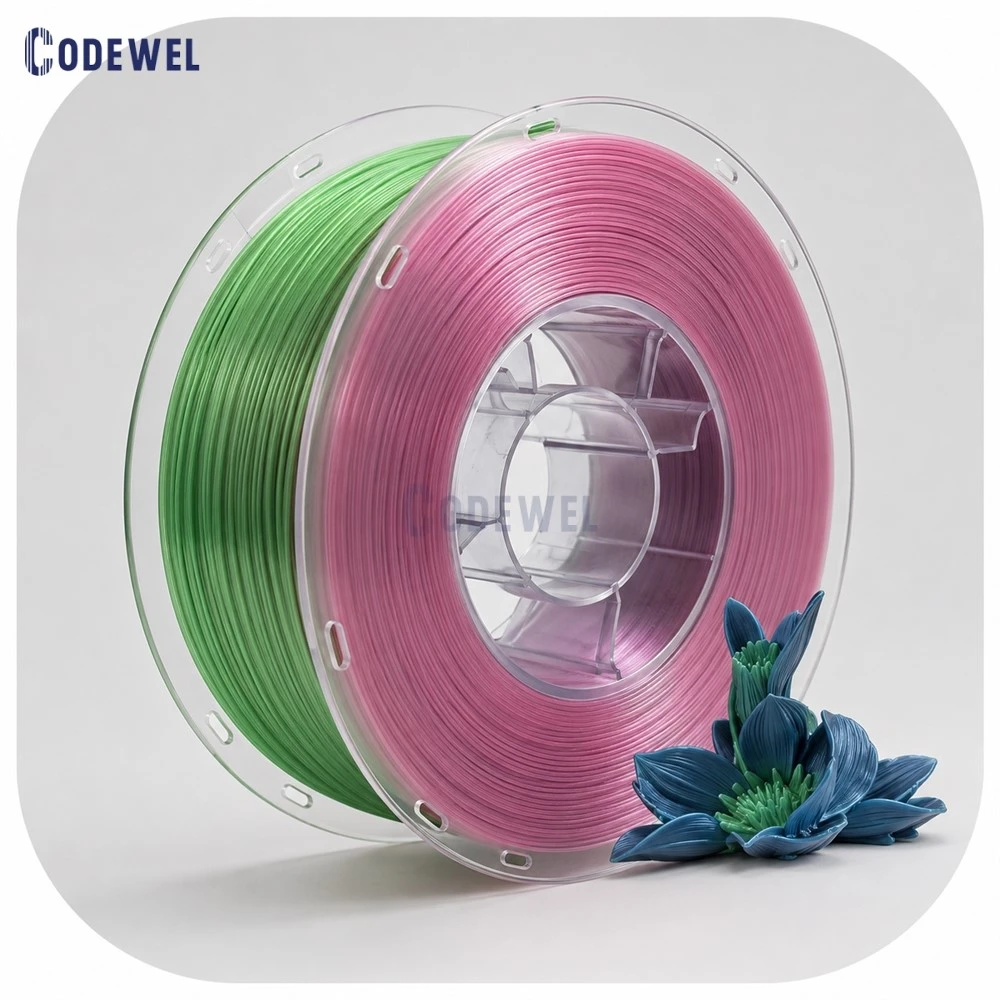
Silk PLA is a specialty PLA filament designed to produce a glossy, silky, and reflective surface.
Its distinctive appearance is achieved through additives that modify the surface finish of the printed object.
Silk PLA is particularly popular for decorative models and visually appealing products.
Key Features:
- High-gloss, silk-like appearance
- Reflective surface finish
- Excellent visual appeal
- Available in metallic-like and vibrant colors
- May exhibit different mechanical properties from standard PLA
Typical Applications:
- Decorative sculptures
- Flower models
- Christmas decorations
- Gift items
- Display models
Silk PLA is primarily chosen for its appearance rather than its mechanical performance. Some silk formulations may have weaker layer adhesion or be more prone to surface defects than standard PLA.
1.4 Matte PLA Filament
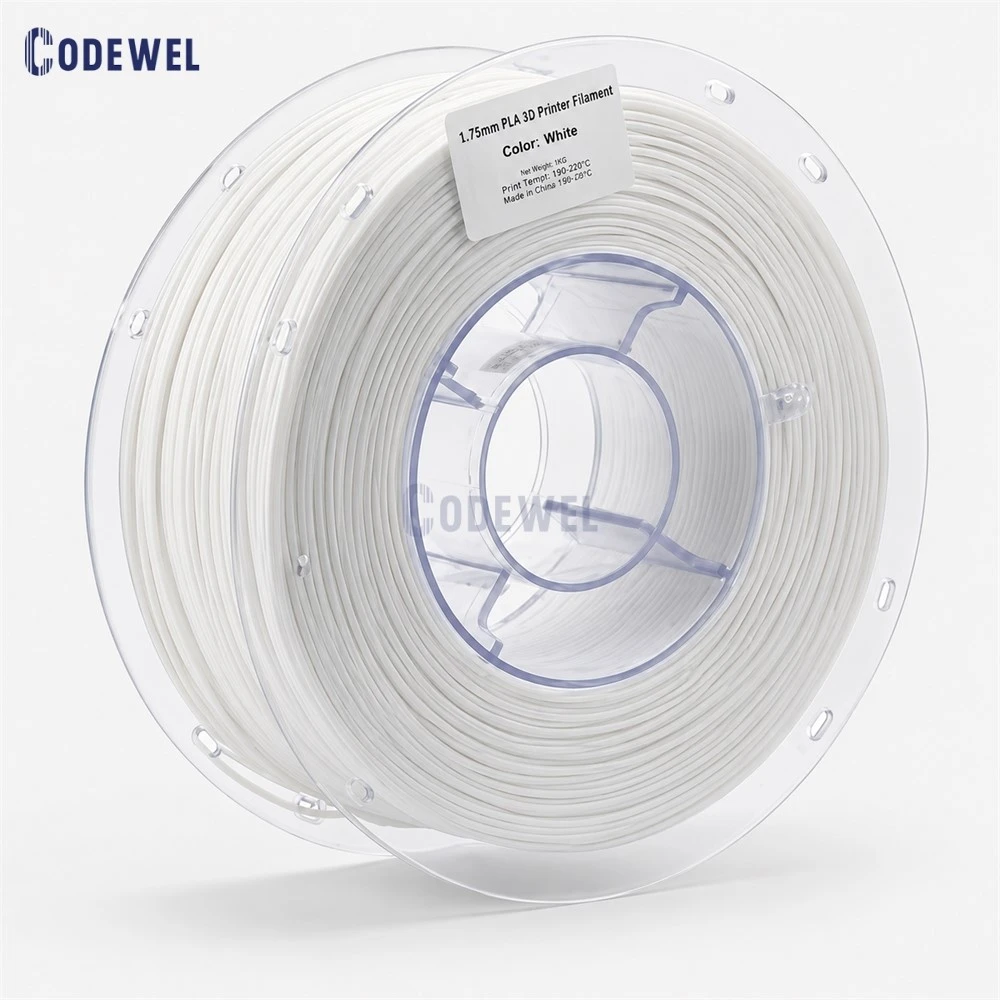
Matte PLA is formulated to produce a non-glossy, low-reflection surface.
Unlike standard PLA, which often has a slightly shiny finish, Matte PLA provides a softer and more refined appearance.
Key Features:
- Non-glossy surface
- Reduced light reflection
- Smooth and professional appearance
- Excellent for hiding minor layer lines
- Suitable for aesthetic and design-focused projects
Typical Applications:
- Architectural models
- Product design prototypes
- Modern decorative objects
- Art pieces
- Display models
Matte PLA is particularly suitable for designers who want printed models to resemble finished products rather than conventional 3D-printed objects.
1.5 Wood PLA Filament
Wood PLA is a composite filament containing PLA blended with wood-derived particles or fibers.
Depending on its formulation, it can create a printed object that resembles natural wood in appearance and texture.
Some Wood PLA filaments can also be lightly sanded or stained after printing.
Key Features:
- Wood-like texture and appearance
- Natural-looking surface finish
- Suitable for decorative applications
- Can be post-processed in certain formulations
Typical Applications:
- Miniature furniture
- Architectural models
- Decorative sculptures
- Artistic objects
- Wood-effect prototypes
Important Printing Consideration:
Wood-filled PLA may increase the risk of nozzle clogging, particularly when the filament contains larger particles. A nozzle with a larger diameter may be recommended depending on the product specification.
1.6 Marble PLA Filament
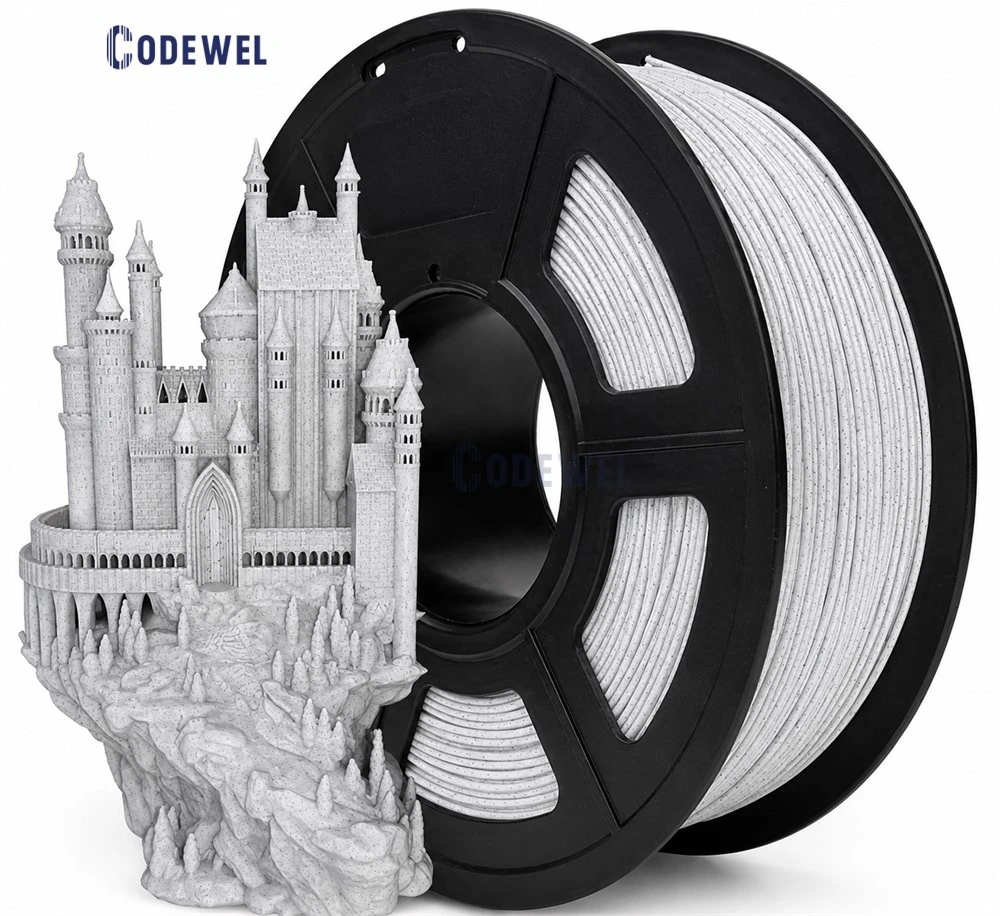
Marble PLA is designed to imitate the appearance of marble, stone, or granite.
It typically contains colored particles or visual additives that create a speckled stone-like effect.
Key Features:
- Stone-like appearance
- Textured visual effect
- Excellent for decorative models
- Helps conceal certain layer lines
- Available in various marble-inspired colors
Typical Applications:
- Architectural decorations
- Statues and sculptures
- Interior design models
- Decorative vases
- Artistic prototypes
Marble PLA is an excellent choice for projects requiring a stone-like appearance without the weight and complexity of actual stone materials.
1.7 Carbon Fiber PLA Filament
Carbon Fiber PLA is a composite filament consisting of a PLA base reinforced with carbon fibers, commonly chopped carbon fiber.
The carbon fiber reinforcement can improve stiffness and dimensional stability, depending on the formulation and fiber content.
Key Features:
- Increased stiffness
- Improved dimensional stability in many formulations
- Matte or textured surface finish
- Reduced tendency for certain parts to deform
- Suitable for lightweight structural prototypes
Typical Applications:
- Drone components
- Robotics prototypes
- Lightweight brackets
- Mechanical fixtures
- Engineering models
Important Printing Consideration:
Carbon Fiber PLA is abrasive and can cause significant wear to standard brass nozzles. A hardened steel or other wear-resistant nozzle is generally recommended.
Carbon Fiber PLA is often selected for stiffness rather than toughness. It should not automatically be considered stronger in every direction or more impact-resistant than standard PLA.
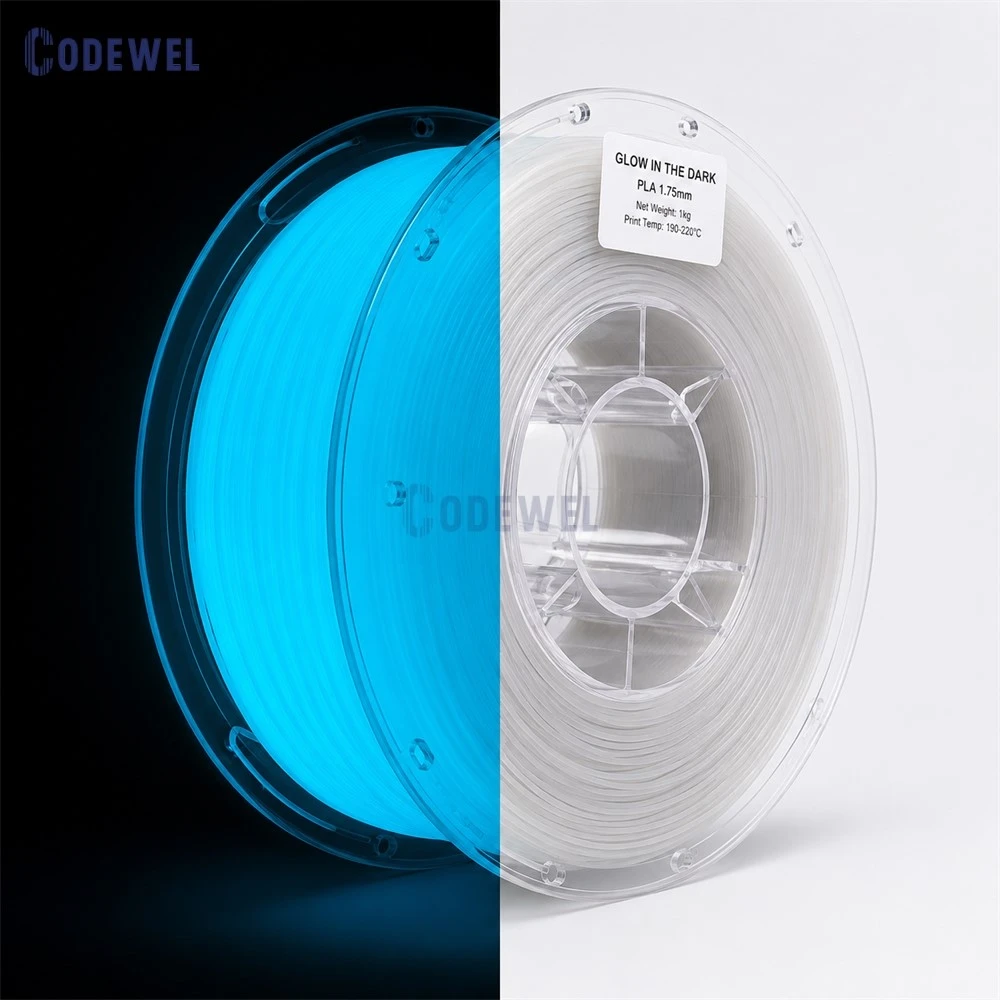
1.8 Glow-in-the-Dark PLA Filament
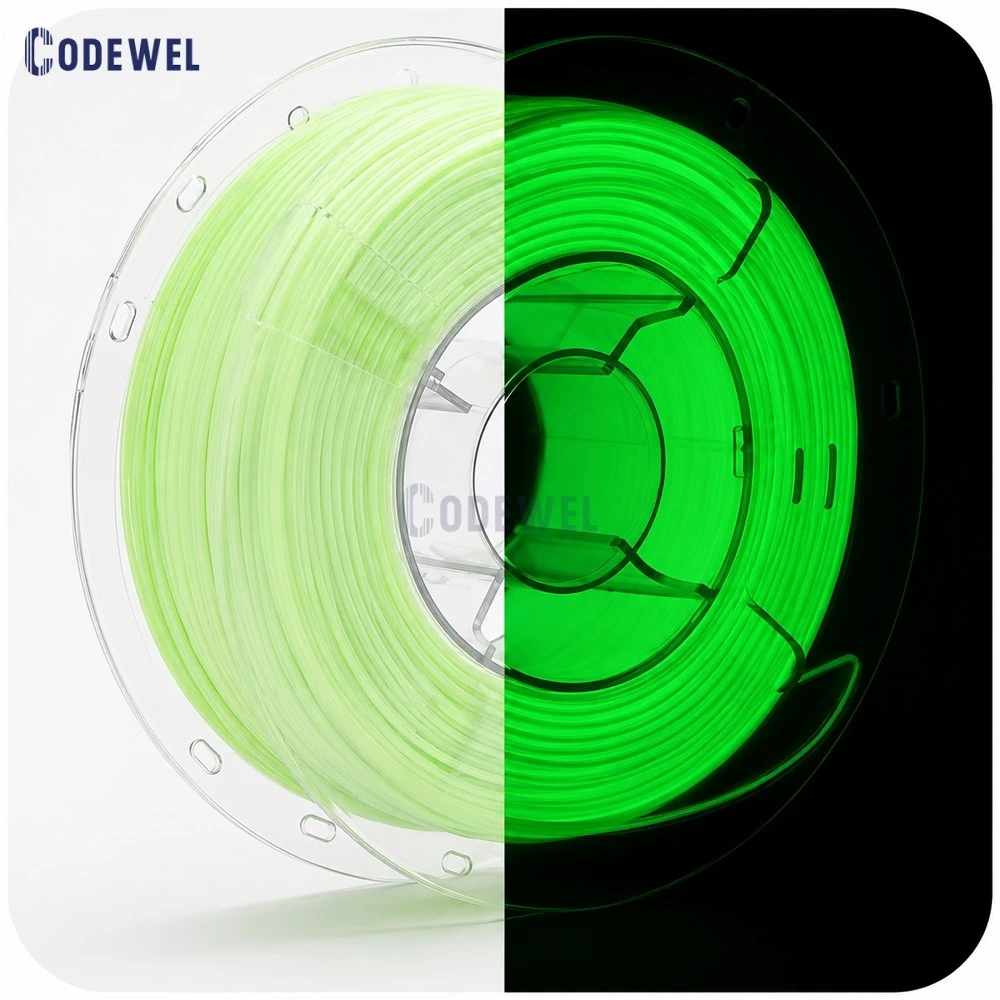
Glow-in-the-Dark PLA contains phosphorescent pigments that absorb light energy and emit visible light in dark environments.
The filament can create eye-catching effects for decorative and novelty applications.
Key Features:
- Emits light after exposure to a suitable light source
- Available in different glowing colors
- Suitable for decorative printing
- Provides distinctive visual effects
Typical Applications:
- Night-light decorations
- Halloween models
- Decorative signs
- Toys
- Creative art projects
Glow-in-the-dark PLA is often abrasive because of its luminous additives. A wear-resistant nozzle is recommended to reduce nozzle wear.
1.9 Transparent and Translucent PLA Filament
Transparent PLA is designed to allow light to pass through the printed object.
However, FDM printing creates visible layers and interfaces, so printed parts may appear translucent or cloudy rather than optically clear.
Key Features:
- Light-transmitting properties
- Suitable for decorative lighting effects
- Available in clear and tinted colors
- Useful for visual prototypes
Typical Applications:
- Lampshades
- Decorative light covers
- Transparent-style models
- Product appearance prototypes
The final transparency depends on filament formulation, printing temperature, layer height, infill, and post-processing methods.
1.10 Rainbow and Multicolor PLA Filament
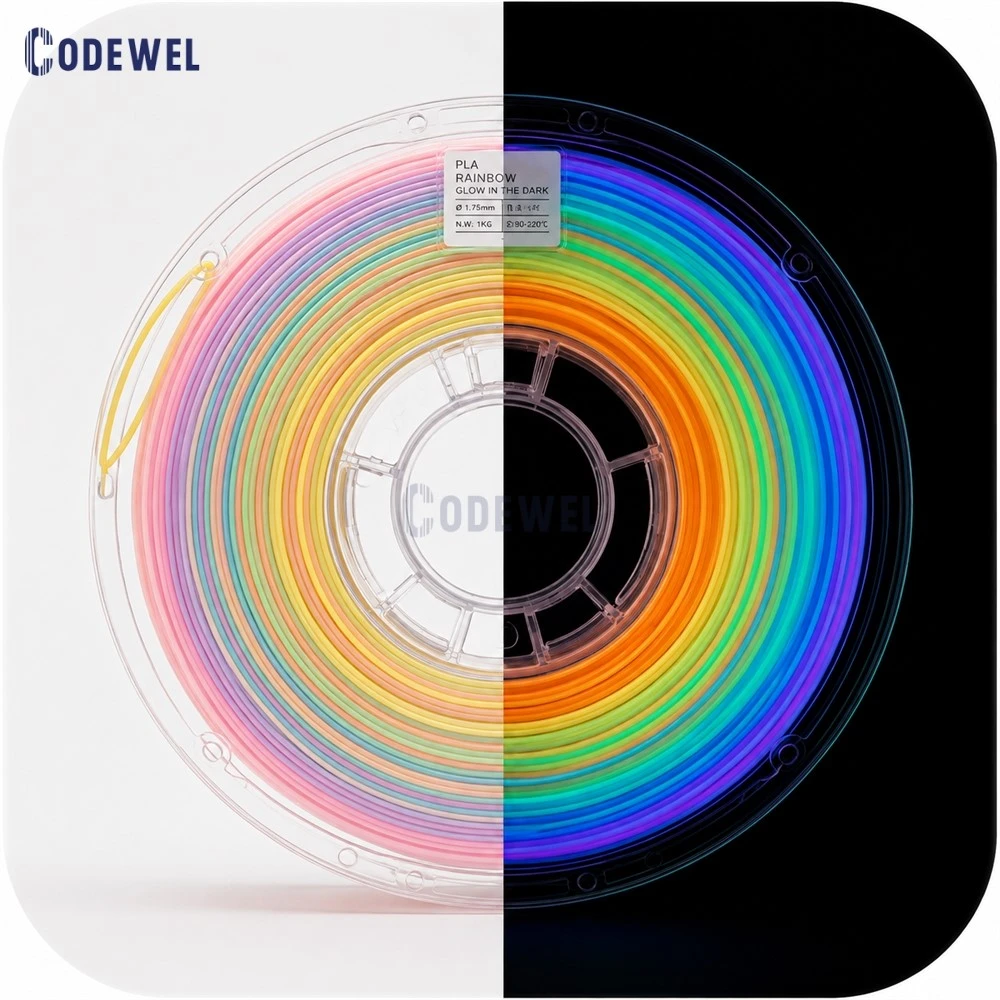
Rainbow PLA and multicolor PLA are designed to create color-changing or multicolored printed objects.
Rainbow PLA typically changes color along the filament length, while some multicolor filaments use more complex color transitions.
Key Features:
- Multiple colors in one spool
- Attractive visual effects
- Reduces the need for manual color changes
- Suitable for decorative printing
Typical Applications:
- Artistic sculptures
- Decorative vases
- Figurines
- Creative gifts
- Colorful display models
The color transition length varies by manufacturer. Smaller models may not show the full range of colors available in a spool.
1.11 High-Speed PLA Filament
High-Speed PLA is formulated to support higher printing speeds and greater volumetric flow rates on compatible 3D printers.
With the increasing popularity of high-speed FDM printers, this type of filament has become an important option for productivity-focused users.
Key Features:
- Designed for high-speed printing
- Improved melt-flow characteristics in many formulations
- Suitable for rapid prototyping
- Can reduce printing time when printer capabilities allow
Typical Applications:
- Rapid prototyping
- Batch production of models
- High-volume hobby printing
- Manufacturing design iterations
High-Speed PLA does not guarantee faster printing on every machine. Actual speed depends on the printer's hotend, cooling system, nozzle size, and other operating parameters.
2. Comparison of Different PLA Filament Types
The following table summarizes the differences between common PLA 3D printing filament varieties.
| PLA Type | Main Advantage | Surface Appearance | Best Application |
| Standard PLA | Easy printing | Smooth | General printing |
| PLA+ | Improved toughness | Smooth | Functional prototypes |
| Silk PLA | Glossy finish | Silky and reflective | Decorative objects |
| Matte PLA | Non-reflective finish | Matte | Design models |
| Wood PLA | Wood-like appearance | Natural texture | Artistic models |
| Marble PLA | Stone-like effect | Speckled | Sculptures |
| Carbon Fiber PLA | High stiffness | Matte/textured | Engineering prototypes |
| Glow-in-the-Dark PLA | Luminous effect | Specialty finish | Decorative models |
| Transparent PLA | Light transmission | Clear or translucent | Lighting prototypes |
| Rainbow PLA | Color transitions | Multicolored | Creative models |
| High-Speed PLA | Faster printing potential | Usually smooth | Rapid prototyping |
3. How to Choose the Right PLA 3D Printing Filament
Selecting the right PLA filament depends on the purpose of the printed object, the required performance, and the capabilities of the 3D printer.
Choose Standard PLA for Beginners
If you are new to 3D printing, standard PLA is an excellent starting point. Its easy printing characteristics and broad compatibility make it suitable for learning and everyday projects.
Choose PLA+ for Functional Parts
If your printed parts require improved toughness or impact resistance, PLA+ may be a better choice than standard PLA.
However, for parts exposed to sustained high temperatures, significant mechanical loads, or outdoor conditions, other engineering materials may be more suitable.
Choose Silk or Matte PLA for Appearance
When surface finish is the primary consideration, Silk PLA and Matte PLA are popular options.
Silk PLA provides a glossy, reflective finish, while Matte PLA delivers a low-reflection and sophisticated appearance.
Choose Composite PLA for Specialized Effects
Wood PLA, Marble PLA, and Carbon Fiber PLA are suitable for projects requiring specific visual or mechanical characteristics.
Before printing, check the manufacturer's recommendations for nozzle type, nozzle diameter, temperature, and printing speed.
Choose High-Speed PLA for Productivity
For users operating high-speed 3D printers, High-Speed PLA can be an effective solution for reducing printing time and improving prototyping efficiency.
Always ensure that the filament is compatible with the printer's extrusion and cooling capabilities.
4. Recommended PLA Printing Parameters
Although PLA is generally easy to print, the optimal printing parameters vary according to filament formulation and printer configuration.
The following values are general starting points, not universal specifications.
| Parameter | Typical Starting Range |
| Nozzle Temperature | 190–220°C |
| Heated Bed Temperature | 0–60°C |
| Printing Speed | 40–100 mm/s for conventional setups |
| Cooling Fan | Generally High After Initial Layers |
| Nozzle Diameter | 0.4 mm |
| Recommended Storage | Dry, sealed environment |
High-Speed PLA may require higher temperatures or different flow settings. Composite filaments may also require special nozzle configurations.
For the best results, follow the manufacturer's technical data sheet and perform calibration tests before printing complex models.
5. Common Problems When Printing PLA Filament
Even though PLA is one of the easiest 3D printing materials to use, several common problems may occur.
Stringing
Stringing occurs when thin strands of filament appear between printed structures.
Possible solutions:
- Adjust retraction settings
- Reduce excessive nozzle temperature
- Dry the filament if moisture is present
Warping
PLA generally has a low tendency to warp, but large or poorly adhered prints may still lift from the build plate.
Possible solutions:
- Improve build plate adhesion
- Clean the printing surface
- Adjust the bed temperature
- Use a brim for large models
Poor Layer Adhesion
Weak bonding between layers can result in brittle or easily separated parts.
Possible solutions:
- Increase nozzle temperature within the recommended range
- Reduce excessive printing speed
- Optimize cooling settings
- Check filament quality and moisture levels
Nozzle Clogging
Nozzle clogging may occur when printing certain composite PLA filaments.
Possible solutions:
- Use the recommended nozzle diameter
- Check for abrasive or particle-filled additives
- Clean the nozzle regularly
- Follow the manufacturer's printing instructions
Conclusion
PLA 3D printing filament offers a versatile range of material options for different printing requirements.
From standard PLA for everyday printing to PLA+ for improved toughness, Silk PLA for decorative finishes, and Carbon Fiber PLA for enhanced stiffness, each type serves a specific purpose.
Understanding the differences between PLA filament types can help users improve printing quality, reduce material waste, and select the most suitable filament for their projects.
When choosing PLA 3D printing filament, consider not only the appearance and price but also the mechanical properties, printing compatibility, and intended application.
With the right filament selection and optimized printing parameters, PLA can deliver excellent results for both creative and professional 3D printing applications.