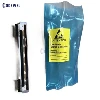
Direct thermal printing, also known as thermal printing, uses a thermal printing head to heat the thermal paper. The thermal paper turns black in the heated area, forming an image. The print head directly applies pressure and heat to chemically treated and ink coated paper. When issuing a printing command, the print head aims at the area on the paper and transfers heat to it. When the coating of the paper reaches the threshold temperature, it will turn black, resulting in an image.
Direct thermal printing does not use ink, toner, or ribbons, but requires special thermal paper. Most applications, such as barcodes or shipping labels, only require black printing, so it is usually not a problem. However, some units have color options, although the selection range is not extensive.


Thermal printers are durable, require less maintenance, and have a longer lifespan than traditional printers. Due to their portability, speed, and ability to create continuous slices or rolls, they are commonly used in seabed exploration and engineering geology.
Thermal printers are widely used due to their energy efficiency, speed, and portability. Here are some uses for many purposes in different industries:
Logistics and transportation: transportation, receiving, inventory management, packing lists, return labels
Manufacturing: compliance labeling, maintenance or part management, quality assurance, progress tracking
Healthcare: Patient identification wristbands, laboratory or pharmacy sample labels, asset management
Retail and hotel industry: price tags, POS or mobile POS receipts, guest cards or passes, ID cards, inventory management
Government: supply chain labels, emergency management, identity badges, system management
Advantages of thermal printers
1. Thermal printers do not rely on ink for printing, so the cost is lower.
No need to replace ribbons, ink cartridges, or other consumables to ensure continuous use. The medium itself is the only supply required to keep the printer running.
2.These compact printers are easy to carry and use on the go.
The lightweight design allows you to easily carry it with you. Use them in offices or warehouses, trade exhibitions, and demonstrations.
3. Thermal printers can provide high-quality results and high printing speed.
Expect results that are stain free, highly clear, and long-lasting, and can be printed in just a few milliseconds.
4. Thermal printers have almost no moving parts.
Due to the limited number of moving parts in thermal printers, there are fewer damaged items and they are easy to maintain. The average lifespan of a thermal printer print head is about 10 years.
If you are looking for a good and sustainable solution to print logos, shipping labels, barcodes, or receipts, then thermal printers are an excellent choice. Although inkjet printers can produce realistic printing effects, there are many limitations in terms of portability and consumable costs, making them less ideal choices for these applications. Although you may pay more upfront, you will ultimately save on consumables costs and the overall durability of the thermal printer.