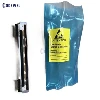
A label printer is a printer designed specifically for printing individual labels.
Typically, label printers have an interface, which means that individual data, such as batch numbers, can be obtained from ongoing production or a database. This information is then printed individually on the label.
Popular Products

Barcode Printer TSC TTP 244 PRO

Domino V320i 53mm Thermal Print Head

Domino V320i 53mm Thermal Print Head

Original Markem-Imaje ENM10041170 Printhead Module Assembly

MU641 600dpi FOR Tsc Metal Industrial Bar Code Printer

98-0470023-00LF FOR TSC TTP-MU641 600dpi Thermal Print Head
How does a label printer work?
In the industrial sector, thermal printing and thermal transfer printing are the two most widely used processes for label printers. However, label printers using inkjet printing technology are also common.
Label printers come with standard features not found in traditional desktop printers. For example, so-called molecules automatically calculate specific values within the printer for each printed label. On the other hand, the date offset feature automatically determines and prints the shelf life, which is very useful in the packaging industry.
Another interesting feature of label printers is field linking. This feature allows multiple data to be linked within the same tag. For example, it is possible to print a barcode consisting of different data stored on the label. This may include weight information, date of manufacture, or any other alphanumeric characters.
Label printer features vary between home, business, and industrial models.
desktop label printer
These are generally designed for light to medium duty use and are available in roll widths up to 100mm (4in). They are quiet and cheap. Commercial label printers can typically accommodate larger paper rolls up to 200 mm (8 inches) wide, making them suitable for medium-volume printing.
Industrial label printer
They are designed for heavy-duty continuous operation in warehouses, distribution centers and factories. Additionally, industrial portable label printers are designed for heavy-duty operations in the field. They are usually handheld and come in an industrial hard case. Examples of applications include marking electrical installations without computers, construction sites and production halls.
RFID reader
These are specialized label printers that simultaneously print and encode on RFID transponders (labels) encased in paper or printable synthetic materials. RFID tags require printed information to be backwards compatible with barcode systems so that human users can identify the tags.
label printer labeling machine
These are designed to automate the labeling process. These systems are common in manufacturing and warehousing facilities where boxes and pallets need to be marked for shipping.
labeling software
It runs on a general-purpose personal computer and is designed to create and/or format labels for printing. The software can use the native operating system printer driver, or embed the driver in the software, bypassing the operating system printing subsystem. It can be used with the dedicated label printers described in this article, or with single-sheet or continuous-feed labels in a general-purpose computer printer.
Personal label printer or label maker
These are handheld or small desktop devices. They are suitable for home offices and small businesses. The cost of these printers is usually very low, making them popular with low-volume users; but they print on special tape, usually thermal tape, and like Seiko smart labels, they are often expensive. [3] In the past, mechanical systems that worked by embossing colored plastic strips (called embossing strips) were common. The letter-shaped hammer creates a letter-shaped squeeze on the other side of the tape. The raised plastic changes color to provide visual contrast. Today, this type has been almost completely replaced by electronic thermal transfer equipment with a built-in keyboard and display and an integrated ink cartridge that contains the label material (and print ribbon, if used).
Which label printer is best for me?
Which label printer is best for you will naturally depend on the intended application.
If you just want to print labels and then apply them manually, a regular printer with the right labeling software is usually enough. However, if you need an industrial printer with pleats, SATO's CL4NX may be the right choice.
On the other hand, if you want to combine label printing and application, then purchasing a label printer and dispenser would be the recommended solution. These labeling machines are able to print labels and then apply them on the desired products. Therefore, a lot of time is saved and products can be sent faster.