


A barcode reader, also known as a price scanner or point-of-sale (PoS) scanner, is a handheld or fixed input device used to capture and read the information contained in barcodes.
A barcode reader includes a scanner, a decoder (built-in or external), and a cable to connect the reader to a computer or POS system.
How do barcode readers work?
Since a barcode reader only captures the barcode and converts it into numbers and/or letters, the data must be sent to a computer so that a software application can convert the data into information.
Our Products

Self-adhesive ECO Direct Thermal Jumbo Roll Paper

Self-adhesive ECO Direct Thermal Jumbo Roll Paper

70g Facepaper Eco DT Label Without Backpaper Linerless Sticker
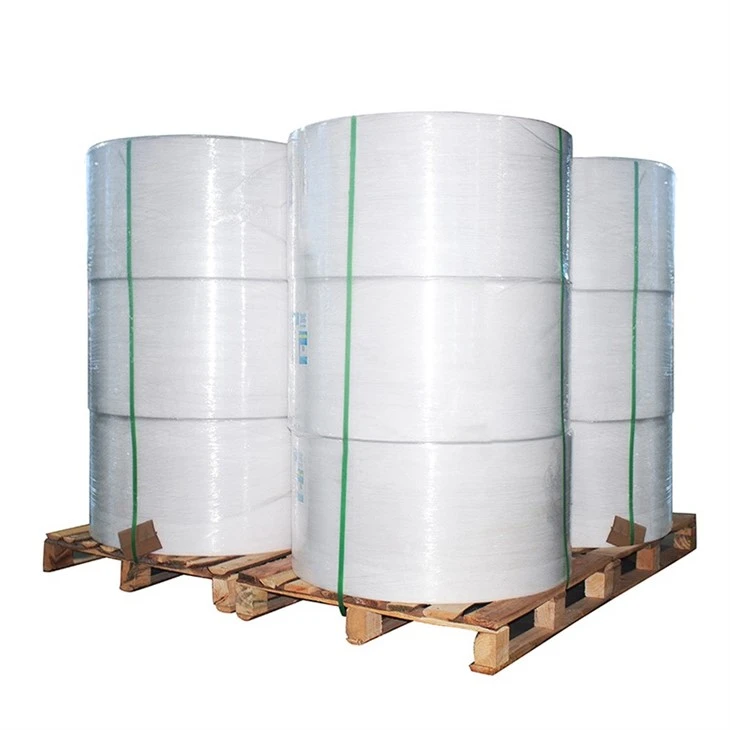
Self-adhesive 70g Offset Woodfree Jumbo Paper

GK888 Zebra Printhead 300dpi Original

403325 32mm Printhead For Videojet 6210 6320 Printer Original Spare Parts

ZT420 300dpi Toggle Bar Spare Parts For Zebra Printer

PT-210 POS 58MM Mini Handheld Printer
A barcode scanner can be connected to a computer through a serial port, keyboard port, or an interface device called a wedge. Or an interface device called a wedge that connects to the computer. Barcode readers work by directing a beam of light through the barcode and measuring the amount and pattern of reflected light.
The scanner converts light energy into electrical energy, which is then converted into data by a decoder and forwarded to the computer.
What are the advantages of barcode readers?
Reduce pricing errors
Improve accuracy and efficiency
Improve customer service
Reduce inventory levels
How many types of barcode readers are there?
There are two types of barcode readers: handheld and fixed.
Handheld barcode readers are used in a variety of environments, including retail stores, warehouses, and office buildings.
Fixed-position barcode readers are commonly used in manufacturing and logistics applications to track the movement of inventory or products through the production process.
Barcode readers come in many forms, depending on their use case:
Pen wand barcode readers contain no moving parts and are known for their durability and low cost. They are commonly used to scan barcodes printed on paper labels, such as in libraries, package delivery and office environments.
The slot scanner remains stationary and the barcoded item is manually pulled through the slot. Slot scanners are often used to scan barcodes on ID cards, for example, for time and attendance tracking or physical access control.
CCD scanners have a better read range than pen wands and are often used in retail sales with a "gun" type interface that is only one inch away from the barcode. Each time a barcode is scanned, multiple reads are made to reduce the chance of errors.
Image scanners use a small camera to capture an image of a barcode and then use sophisticated digital image processing techniques to decode the information in the barcode. Image scanners can read barcodes from approximately 3 to 9 inches away and typically cost less than laser scanners.
Laser scanners, whether handheld or fixed, use a mirror and lens system that allows the scanner to read barcodes regardless of orientation and can easily read barcodes up to 24 inches away.
3D scanners create a three-dimensional image of the barcode so that it can be read from any angle. 3D barcode scanners are typically used in industrial settings such as automotive assembly or aerospace manufacturing. Barcode readers are an essential part of many businesses, and their barcode scanning needs vary by industry and application.
CGI scanners are used to read barcodes printed on curved surfaces such as cans or pipes. CGI scanners are commonly used in the food and beverage industry.
Are there any disadvantages to using a barcode reader?
Barcode readers have some disadvantages:
the possibility of misreading, resulting in data errors;
There needs to be a clear line of sight between the barcode and the scanner; and
The barcode needs to be printed on the label or tag.
How to ensure accurate barcode reading?
There are several ways to ensure accurate barcode reading:
Keep barcodes clean and free of smudges or dirt.
Make sure the barcode prints clearly and at the correct resolution.
Make sure the barcode is the right size for the scanner you are using.
Use high-quality barcode labels or hang tags.
Barcode readers are versatile and essential tools for businesses of all types and sizes.
Barcode readers offer many advantages, including improved accuracy and efficiency, that can help businesses increase their profits.


