


There are two types of barcodes: one-dimensional (1D or linear) and two-dimensional (2D). They are used in different types of applications and in some cases use different types of technology for scanning. The differences between 1D and 2D barcode scanning depend on their respective layouts and the amount of data that can be stored, but both can be used effectively in a variety of automatic identification applications.
Our Products

Understanding Thermal Transfer Ribbons: A Comprehensive Guide

Let's Take A Brief Look At Thermal Transfer Ribbons

The Ultimate Guide to Thermal Printing

Thermal transfer vs. direct thermal printing

What's The Difference Between Thermal Transfer And Direct Thermal Printing?

Mini Bluetooth portable printer for printing bills Invoice

How does the thermal transfer printer work
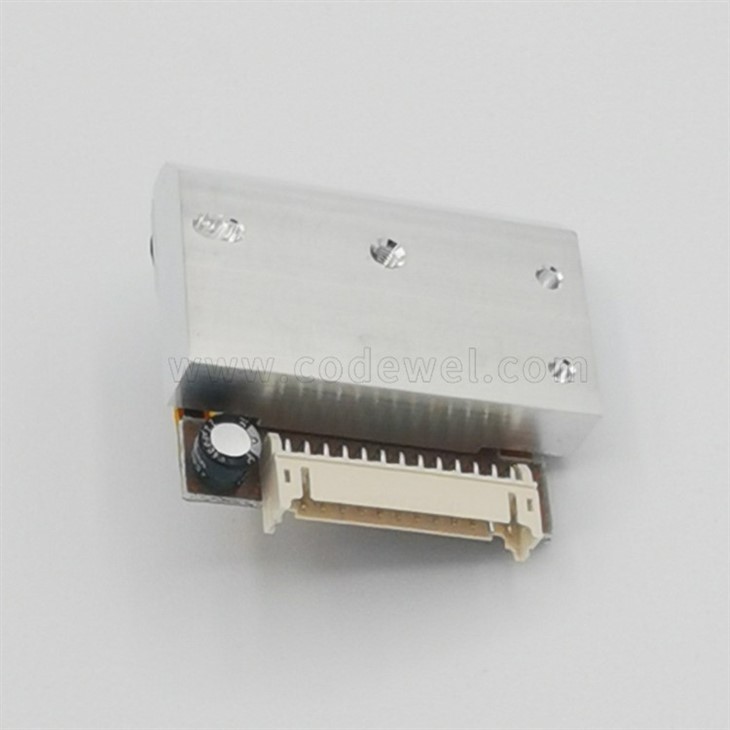
403325 32mm Printhead For Videojet 6210 6320 Printer Original Spare Parts
1D barcode scanning:
Linear or one-dimensional barcodes, such as UPC codes commonly found on consumer products, use a series of variable-width lines and spaces to encode data-which is what most people probably think of when they hear "barcode." Linear barcodes contain only a few dozen characters and often become longer as more data is added. Therefore, users often limit barcodes to 8-15 characters
Barcode scanners read one-dimensional barcodes horizontally. 1D laser barcode scanners are the most commonly used scanners, usually in "gun" models. These scanners do not require direct contact with 1D barcodes to function properly, but typically need to scan within a range of 4 to 24 inches.
1D barcodes rely on a database connection to make sense. For example, if you scan a UPC code, the characters in the barcode must relate to the item in the pricing database to be useful. These barcoding systems are a necessity for large retailers and can help improve inventory accuracy and save time.
How much data can a one-dimensional barcode hold?
Compared with 2D barcodes, the data storage capabilities of 1D barcodes are simpler. Unlike general-purpose two-dimensional barcodes, one-dimensional barcodes have a simple structure that affects their data storage capabilities.
Explore the data capacity of 1D barcodes:
Linear Representation: One-dimensional barcodes are linear data representations with varying widths and parallel line spacing. This linear structure inherently limits the amount of data they can encode.
Digital Focus: 1D barcodes excel at encoding digital data, showing proficiency in seamlessly matching digital information. Although they can contain alphanumeric characters, their main advantage is in efficiently encoding numeric data, making them particularly suitable for tasks such as representing product identification numbers or serial numbers.
2D barcode scanning:
Two-dimensional barcodes (such as Data Matrix, QR codes, or PDF417) use patterns of squares, hexagons, dots, and other shapes to encode data. Due to their structure, 2D barcodes can hold more data (up to 2000 characters) than 1D codes while still appearing physically smaller. The data is encoded according to the vertical and horizontal arrangement of the pattern and is therefore read in two dimensions.
2D barcode scanners do more than just encode alphanumeric information. These codes can also contain images, website addresses, speech, and other types of binary data. This means that you can use this information whether you are connected to the database or not. Items tagged with 2D barcode scanners can transmit a large amount of information.
2D barcode scanners are typically used to read 2D barcodes, although some 2D barcodes, such as the universally recognized QR code, can be read with certain smartphone apps. 2D barcode scanners can read from 3 feet away and are available in common "gun", cordless, tabletop and mounted styles. Some 2D barcode scanners are also compatible with 1D barcodes, providing users with greater flexibility in how they use them.
What are the size limits for 2D barcodes?
The dimensions of 2D barcodes are not predetermined and vary depending on the type of barcode and its encoding method. This adaptability is a key element in 2D barcodes' ability to accommodate various amounts and levels of data.
Let's take a closer look at the changes in 2D barcode size considerations.
Learn about size limits:
Variable Capacity: Unlike 1D barcodes, 2D barcodes do not adhere to strict size restrictions. The data capacity of a 2D barcode depends on factors such as the type of symbol used, the level of error correction and the size of the data module.
Symbology Impact: Different 2D barcode symbologies have different size limitations. For example, Data Matrix barcodes may have different size limitations than QR codes.


